

How To Set The Hardness Level On Water Softener
What should my water softener hardness be gear up at?
Last updated on: June 1, 2022.
Contents
- ane What should my water softener hardness be set at?
- 1.1 When should yous accommodate the hardness setting?
- 1.2 What is a good hardness level for water?
- 1.3 What happens if yous set water softener incorrectly?
- 1.three.ane Regeneration cycle
- 1.3.two Regeneration bike time
- one.3.iii Regeneration cycle length
- 1.3.four Salt dosage
- 1.4 Learn how to adjust the hardness on h2o softener?
- 1.five How often should you change the settings in water softener?
- 1.half-dozen Oftentimes Asked Questions:
- 1.6.1 1. Is 25 ppm hard h2o?
- ane.half-dozen.two ii. How much common salt should yous put in a difficult water?
- 1.half-dozen.three iii. How tin can you remove the hardness of water?
- i.six.four 4. Can water be too soft?
- ane.6.5 5. In which ways you lot can test if water softener is working properly?
- 1.7 Decision
- ane.8 About The Author
Hardness levels in water are not always the aforementioned. For instance, the hardness level is greater than 7 grains per gallon or 120 mg/ L; you lot might need a water softener that is suitable to that hardness level. If the water is besides contaminated with iron, the hardness settings can be adjusted accordingly. This aligning can be made by turning the dial or selecting the right programme.
When should you adjust the hardness setting?
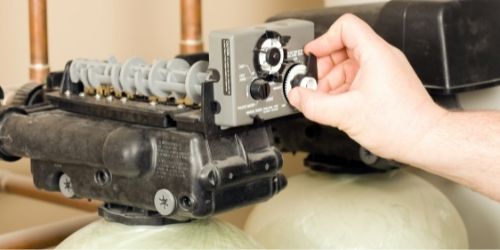
H2o softeners are used to eliminate hardness. Simply, the settings may need to be adapted if the water turns out to be besides soft, or you lot are starting time to use a lot more table salt than usual, or you notice that in that location are other contaminants in the water.
However, these indicators may non e'er be accurate, and irresolute the settings based on these factors may not be a good idea. For instance, y'all can never accept water that is as well soft. Water either has hard minerals that create limescale, or it doesn't. As far equally household appliances are concerned, there is no such matter as as well soft water.
Similarly, as far as drinking water or water used for washing and bathing is concerned, water that doesn't leave a viscous residual or make the skin feel dry is good. People accustomed to hard water may demand some time to adjust to soft water. But that's all it takes to meet the difference between hard and soft water.
If you detect that the water softener is using an excessive amount of common salt, you lot may think of adjusting the hardness setting. Just, that is not necessarily true. Excessive salt consumption has more to do with the brine tank or the controller-head. Checking the level of water in the brine tank will be a get-go. If at that place is more than water in the brine tank than necessary, the water softener will consume more salt.
Ideally, h2o levels should not be more than an inch college than the salt platform. Sometimes, at that place could be a leak that causes h2o to go into the alkali tank, or the controller is releasing more than water than it should. Therefore, salt consumption may not be reason enough to conform the hardness setting.
A more than legitimate reason for changes to the water hardness setting is the existence of fe in the h2o. This is more and so in the case of well water. H2o from the well should be tested every six months equally it is hard water and contains minerals and iron that need to be removed.
While water softeners can remove atomic number 26 from the water, they are not specially designed to handle loftier concentrations of it. And so, you may demand to suit the hardness setting.
What is a good hardness level for water?
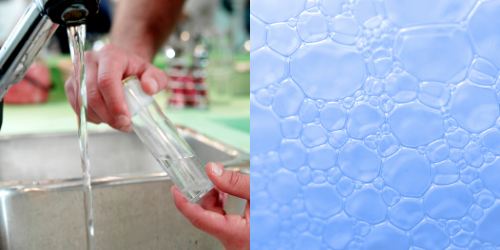
H2o softeners are used to eliminate hardness. But, the settings may need to exist adapted if the h2o turns out to be too soft, or you are beginning to utilize a lot more salt than usual, or you lot find that in that location are other contaminants in the water.
Notwithstanding, these indicators may not always be authentic, and irresolute the settings based on these factors may non exist a skillful idea. For example, you can never have water that is too soft. Water either has difficult minerals that create limescale, or it doesn't. As far as household appliances are concerned, at that place is no such thing as too soft water.
Similarly, as far as drinking water or water used for washing and bathing is concerned, water that doesn't exit a sticky residue or make the pare feel dry is adept. People accustomed to difficult water may need some time to adjust to soft water. Just that's all information technology takes to see the difference between hard and soft water.
If you detect that the water softener is using an excessive corporeality of salt, y'all may call up of adjusting the hardness setting. But, that is non necessarily true. Excessive table salt consumption has more than to do with the brine tank or the controller-head. Checking the level of water in the brine tank will be a start. If there is more h2o in the alkali tank than necessary, the water softener will swallow more salt.
Ideally, h2o levels should not be more than an inch higher than the salt platform. Sometimes, there could exist a leak that causes water to become into the brine tank, or the controller is releasing more water than it should. Therefore, common salt consumption may not be reason plenty to adjust the hardness setting.
A more legitimate reason for changes to the water hardness setting is the existence of iron in the water. This is more than and then in the instance of well water. H2o from the well should be tested every six months equally information technology is hard water and contains minerals and iron that need to exist removed.
While water softeners can remove fe from the h2o, they are not specially designed to handle high concentrations of it. So, you may need to adjust the hardness setting.
The dominion of pollex is that a good hardness level should not be college than 120 to 170 mg/L, i.e., seven to ten grains per gallon of water. An accurate water analysis written report should show yous the hardness level. Y'all can get the h2o tested in a lab, or exercise it yourself at home with a h2o hardness exam kit. If you lot are using city water, you should be able to get a water analysis written report from the urban center.
Hardness is measured by assessing h2o'southward capacity in reaction with soap. For instance, if the water is difficult, you would demand more soap to create lather. You would also need to employ more than cleaning solutions in your home. The reverse is also true, i.e., if the water is soft, yous will find that you utilize less lather and withal get enough lather and bubbles.
Water is considered hard when it contains high amounts of magnesium and calcium. The full hardness is the sum of magnesium and calcium concentrations, or calcium carbonate, in milligrams per liter (mg/L). You tin find your water'due south hardness level based on the below concentration levels.
Concentration Levels:
• Anything beneath 75 mg/L would exist considered soft
• Betwixt 76 and 150 mg/L makes the water moderately hard
• From 151 to 300 mg/50 means the h2o is hard
• Anything over 300 mg/L ways that the water is very hard.
What happens if you fix h2o softener incorrectly?
Setting water softeners correctly makes them more efficient. If the water is from the municipality, the customs h2o may already exist softened. You may not need to add a softener. And so, the softener must be gear up to the hardness level of the h2o supply. If the hardness setting is too high, the softener will waste material a lot of water and cost more to operate.
Water softeners usually have four settings: cycle frequency, time, length, and salt dose. Hardness settings revolve around the regeneration procedure, which is a critical stage in water softening.
Regeneration cycle
Setting water softeners correctly makes them more than efficient. If the water is from the municipality, the community water may already be softened. You may not need to add a softener. So, the softener must be fix to the hardness level of the water supply. If the hardness setting is too loftier, the softener volition waste a lot of water and price more to operate.
Water softeners normally have four settings: cycle frequency, fourth dimension, length, and salt dose. Hardness settings revolve around the regeneration process, which is a critical stage in water softening.
Regeneration cycles are normally set for anywhere from one to 7 times per week. This should suffice if the water does not go hard between cycles. Yous can choose the best frequency for your softener and water by agreement the amount of water used, the number of contaminants or minerals in your h2o, and the size of your water softener.
Regeneration bicycle time
Setting the right fourth dimension of 24-hour interval for the h2o softener to begin a cycle is important, as it affects the amount of water output.
During the regeneration bike, the system will not provide new softened water. Moreover, a water softener may be noisy during the regeneration cycle. For best results, you may desire to schedule a regeneration wheel at a time when water is not existence used.
Regeneration cycle length
Most h2o softeners let you to set the length of the regeneration bike. However, the default regeneration cycles take betwixt 30 and 60 minutes to complete. It is a practical fourth dimension frame for near households.
If the regeneration cycle is too short, it could consequence in ineffective resin beads, and if the cycle is too long, it will increase the time y'all get without soft h2o.
Salt dosage
The manufacturer's specifications should tell you how to determine the optimal common salt dose for your water softener. One time you lot set the dose to the recommended setting, yous can run the softener through a transmission regeneration cycle. So, mensurate the hardness of the water. Yous can increase the salt dose if the h2o is still hard.
If your water contains very high amounts of minerals, it might require a higher-than-normal salt dose.
Acquire how to adjust the hardness on water softener?
Suit the water softener "hardness" to the aforementioned number as the hardness that you measured for your own water supply. For example, if you measured your water hardness as 30 grains per gallon (30 GPG), and then the "hardness" setting will be "30."
Your water softener hardness setting should ideally be set to the corporeality of hardness in your h2o plus 4 for every ppm of dissolved iron in the water.
For case, if you lot have 1 PPM of atomic number 26, you must add 4 to the hardness number, and if y'all have 1.5 PPM of iron, yous must add vi to your hardness number, and and then on. You may take to set your hardness a piddling higher on an older water softener as the resin becomes less efficient.
The resin bed inside of a water softener tin can only remove so much hardness from your water before it needs to be regenerated. The hardness setting tells the unit how many gallons of water can exist used earlier regenerating its resin.
Many electrical h2o softeners will utilise the hardness number fix in your h2o softener to calculate how ofttimes the h2o softener will accept to regenerate. The hardness number too controls the common salt dosage needed to regenerate the amount of water softener resin within of its tank.
The salt dosage tin be set manually based on your particular h2o situation on some more than bones water softeners.
How often should you lot modify the settings in water softener?
Regular regenerations are essential because they keep the resins active. Every two to 3 days would piece of work, although some softeners may degenerate every day. There are several factors that decide the regeneration frequency:
If the initial hardness level is high, the unit may need to regenerate two to three times a week. If at that place is iron in the water, more frequent recharging will be required. When the household water usage increases, the water softener may need to regenerate more often than usual.
It also depends on the resin tank capacity, where you lot tin decide the required quantity of common salt. The salt settings will change as the system grows old and shows signs of article of clothing and tear.
Finally, the command valve that is demand-initiated or time-initiated tin can trigger the regeneration process. The quondam is flexible and saves h2o and salt by regenerating merely when information technology is necessary, while the clock on the control valve controls the latter. Y'all would exist setting a time for regenerating at a specific time later a certain number of days.
Ofttimes Asked Questions:
1. Is 25 ppm hard water?
25 ppm in water means that at that place is only 25 mg/ Fifty of hardness causing minerals per liter. Water that has less than 60 ppm is considered soft. Therefore, 25 ppm makes the h2o soft.
2. How much salt should you put in a difficult h2o?
How much table salt you put in a h2o softener depends on the hardness levels of the water and the quantity of h2o usage in the household. An average family of four with hard water will employ near 10 pounds of table salt each week.
3. How can you remove the hardness of h2o?
A water softener can aid remove the hardness of h2o by removing the calcium, magnesium, and other minerals.
4. Can water be too soft?
Water cannot be too soft. Yous may demand time to arrange to soft water if you are accustomed to hard water as soft water. From using too much soap to go a lather, you may detect that you are using much less. The same is true of all other cleaning solutions.
5. In which ways you can test if water softener is working properly?
A simple way to test if your h2o softener is working properly is to practise the soap test. If the Pure liquid soap is mixed with soft water lathers and forms bubbling, the organization works properly. If the aforementioned soap doesn't produce sufficient soap, it means that you still have hard water, and the water softener is not working properly.
Decision
Setting hardness levels in a water softener is cardinal to having the system work effectively and efficiently. Whether the water softener has the option to set it manually or it comes programmed, the water softener must work to remove the hard h2o-inducing minerals such as calcium and magnesium, and iron.
Since the objective is to get softened h2o for consumption, it is imperative that the hardness levels are gear up accurately keeping the hardness of the h2o in mind.
You tin start by testing the water in your home, be it well h2o or municipality water supply. Once yous have the report, you can invest in a h2o softener and set the hardness level accordingly to ensure an uninterrupted supply of safety and soft h2o.

Judith— a passionate water treatment specialist — is a waste product h2o management enthusiast, clean drinking water abet, and someone with deep personal experience and cognition about diverse h2o equipments. Her work was mentioned in endless notable h2o associations. Previously she was an editor at Water Alliance.
Source: https://waterpursuit.com/water-softeners/what-should-my-water-softener-hardness-be-set-at/#:~:text=Your%20water%20softener%20hardness%20setting,hardness%20number%2C%20and%20so%20on.
0 Response to "How To Set The Hardness Level On Water Softener"
Post a Comment